El Paso & El Paso County, Texas
El Paso Water Softener Guide: River Months, Bolson Wells and Salty Taps
A water softener in El Paso has to handle water that changes with the calendar. Part of the year your tap may carry treated Rio Grande water; the rest of the year it leans on wells in two desert aquifers. Hardness moves with that switch, and so do the dissolved salts that a softener cannot take out.
El Paso Water's posted analysis puts hardness at 63 to 236 mg/L depending on the source, averaging about 10.2 grains per gallon, with dissolved solids of 454 to 862 mg/L. That is why a softener alone may not be the whole answer. This Old House (2026) puts single-tank softeners at $500–$1,700.
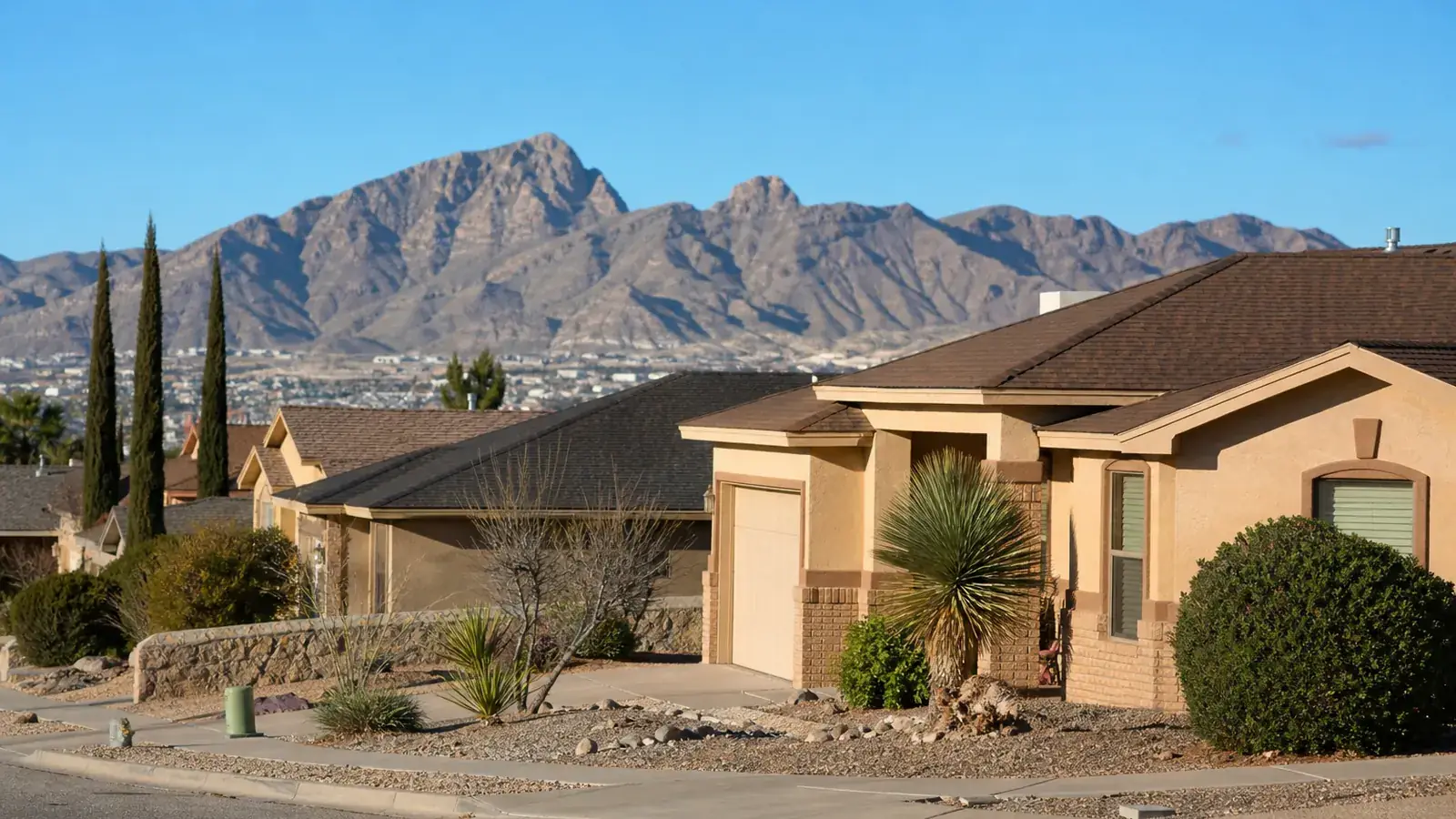
Why does El Paso water change through the year?
El Paso Water serves its customers from three sources: the Rio Grande, and two groundwater aquifers, the Mesilla Bolson and the Hueco Bolson, and its 2025 Drinking Water Report says most customers get water from two of them depending on the season. The utility's chemical analysis shows river water treated at the Robertson, Umbenhauer and Jonathan Rogers plants from March to September, and several well fields feeding the system from October to February, with the Upper Valley wells running year-round.
The sources are not alike. River water and the Lower Valley wells test around 230 to 236 mg/L of hardness, the Upper Valley wells about 119, and the desalination plant source 63. See the full list on El Paso water by source and season.
Does a water softener solve El Paso's water?
It solves half of it. A softener swaps calcium and magnesium for sodium, which stops white scale on fixtures, in water heaters and on shower glass. It does nothing for total dissolved solids, the salts that give El Paso water its mineral taste. The utility's analysis lists those at 454 to 862 mg/L by source, against the 1,000 mg/L maximum listed there, with sodium already at 105 to 217 mg/L before any home softener adds more.
That is where reverse osmosis comes in. RO removes most dissolved salts, including the sodium a softener adds. The reverse osmosis page explains how the two fit together.
Three pages for El Paso water treatment
- Reverse osmosis for El Paso tap waterDissolved solids, sodium and arsenic by the numbers, how RO pairs with a softener, and upkeep.
- Sizing a softener for El Paso's seasonsHardness by part of town, river months versus well months, capacity and valve settings.
- Texas rules for softener and RO installsTCEQ's Water Treatment Specialist license, who is exempt, private wells and the permit question.
- El Paso water softener and RO cost guideSingle and dual tanks, capacity by hardness, RO at the sink or whole house, and upkeep, each with its source.
Know your water before you buy
- El Paso water by source and seasonRio Grande, Mesilla and Hueco Bolson wells, desalination, and the hardness of each.
- Crust, spots, salty taste: what each meansThe signs El Paso homeowners see, answered first, then the page that deals with each.
Water softener installation in El Paso: size for the harder months
A softener set for winter well water can fall behind once river water returns in spring. If your area receives river water, the hardest readings in the utility's analysis, around 13.5 to 13.8 grains per gallon, belong to that season. Size and program the unit for the harder months, or ask for a valve that meters actual use. The sizing page works through the numbers by part of town.
Who may install a softener or RO system in Texas?
The Texas Commission on Environmental Quality (TCEQ) requires anyone who installs, exchanges, connects, maintains or services water treatment equipment under contract, softeners included, to hold a Water Treatment Specialist license. Plumbers licensed under the Occupations Code are exempt. TCEQ notes that private wells which do not meet the definition of a public water system fall outside these rules. Ask the installer for their license class, and ask the City of El Paso whether your job needs a permit. Details are on Texas installation rules.
What happens when you send the form
El Paso Soft Water is an independent local resource built on El Paso Water's published numbers and national cost guides. It sells nothing and installs nothing. Your request goes to one independent water treatment specialist who works in El Paso, who pays this site for it and then contacts you. Ask them which source and season your hardness reading reflects before they size anything.
Questions homeowners ask
How hard is El Paso tap water?
It depends on where you live and the season. El Paso Water's posted analysis lists total hardness from 63 to 236 mg/L across its sources and averages it at about 175 mg/L, or 10.2 grains per gallon. River water treated from March to September tests near the top of that range.
Why does El Paso water taste salty or mineral?
Dissolved solids. The utility's analysis lists total dissolved solids of 454 to 862 mg/L by source and sodium of 105 to 217 mg/L, all within drinking water standards. A softener does not lower either; it adds sodium. Reverse osmosis at the kitchen tap removes most dissolved salts.
Does El Paso use reverse osmosis itself?
Yes, at the Kay Bailey Hutchison Desalination Plant, a joint project with Fort Bliss. It pumps brackish water from the Hueco Bolson and runs it through five reverse osmosis trains, producing up to 27.5 million gallons a day, per El Paso Water.
What does your water leave behind?
Tell us briefly: white crust, a salty or flat taste, an RO faucet that slowed down, or a softener that stopped keeping up in summer. One independent water treatment specialist who works in El Paso will get in touch.